
What is street photography?
A cyclist, an empty chair outside a building, someone waiting somewhere. Street photography starts with everyday life, even when it doesn't seem like much at first glance.
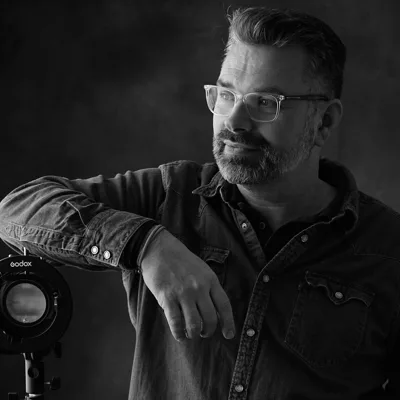
Michiel Heijmans, one of the editors
Updated on October 13, 2026
Photographing everyday life
Picture a village square. A bicycle leans against a wall, and a forgotten glove lies beside a bench. Not much else is happening. Is there a street photo to be made here?
Yes. Whether it will be an interesting photo is another question. But you don't have to wait for someone to walk through the scene before you can call it street photography.
Street photography means photographing everyday life in public spaces, usually without staging the scene. You come across something and take a photo of it. You'll also see the English word candid used in descriptions: unposed, just as it happens.
That's a useful starting point. I just wouldn't turn it into an entrance exam. Start by looking at what interests you. We'll have plenty of time to talk about labels later.
You choose what we get to see
Leaving a scene unstaged doesn't mean you have no choices as a photographer. Where you look from, what you include within the frame, and when you press the shutter: those are your choices.
Think of someone waiting at a bus stop. You could show the entire stop, with the road beside it. You could also take a photo that includes mostly that one person and part of the advertising poster behind them. The scene is the same. The photo tells a different story.
I find that an interesting starting point: you work with what's already there, but choose what to show.
A definition helps you understand the genre. While you're photographing, a specific question will probably be more useful: what actually caught my attention here? Was it that person, or the way they were standing next to the poster?
Outside the city, too
The term street photography can easily bring a busy shopping street to mind. Lots of people, traffic, something to see everywhere. Of course you can photograph there. But a city isn't a requirement.
Everyday life happens in villages, too. In a square, along a quiet street, or by a bench where no one happens to be sitting. Public space doesn't end at the last big store.
So you don't need to plan a trip before you can begin. The area you already know is a good place to look. Maybe you walk past the same building every day. What does it look like when you stop for a moment? What fits inside your photo, and what would you leave out?
A familiar place doesn't have to be a drawback. At least you already know where to get coffee. That's useful, too.
No one has to be in the frame
People can make a street photo interesting. A gesture or the way someone stands gives you something to look at. But having a person in the frame isn't a requirement.
That empty chair outside a building can be a subject, too. Or take the bicycle and the glove in the village square. Those things are part of everyday life, even when their owners are nowhere to be seen.
That doesn't mean every photo of a chair is automatically a successful street photo. The subject alone doesn't do the work. What makes you want to show this particular chair? Where it's standing? Its relationship to the window above it? Those are more specific questions than: does this count as street photography?
For me, that broad definition mostly leaves room to stay curious. You don't have to dismiss a photo you find interesting just because no one happens to be walking through it.
A few names to start with
In street photography, you'll soon come across Henri Cartier-Bresson, who is associated with the “decisive moment.” That idea gives you a good reason to look at timing: why does this particular moment work in a photo? What would change if the photographer had pressed the shutter a little earlier or later?
Other well-known names include Vivian Maier, Saul Leiter, Garry Winogrand, and Ed van der Elsken. Think of them as starting points for looking at photographs. You don't have to memorize their names first. There won't be a quiz.
You could choose one photographer, for example, and spend a little longer looking at a few photos. Where do you look first? What do you notice after that? Try to pinpoint what holds your attention. “Beautiful” is a start, but it doesn't tell you much yet.
You don't have to like everything just because it has a famous name attached to it, either. If a photo doesn't do much for you, you can explore why. Maybe you'll understand what you're seeing better later. Maybe it just won't be your kind of photo.
Why it's worth doing
What appeals to me about street photography is that everyday life can be reason enough. You don't have to come up with a special event. Someone is already waiting. A chair is already there. The question is what you see in it.
That gives you something specific to practice. You take a photo and look at it later to see whether what caught your eye comes across in the photo, too. Maybe the background draws much more attention than you expected. Maybe a small detail turns out to be the reason to keep looking.
That comparison seems more valuable to me than simply deciding whether a photo is “good.” You can be more precise: this is what I wanted to show, and this is what I see in the photo now.
On straatfotografie.nl, you can share your photos and comment on other members' work. A specific observation like that helps when leaving a comment, too. “My eye keeps going back to that chair” gives someone something to think about. You don't need to write an entire essay on photography. Please don't, in fact.
Start by looking
For this first article, the basics are enough: everyday life, public spaces, usually without staging. Cities and people can be part of it. They aren't requirements.
Your camera doesn't have to make things more complicated. A small, light camera and a single fixed focal length can keep things simpler. Settings deserve their own explanation so you understand the choices you can make.
This is the first of four articles in the beginner's learning path. You read them in order, and the site keeps track of what you've already read. So take your time getting started. The street isn't going anywhere.
Questions about What is street photography?
What does candid mean in street photography?
It means photographing everyday life as it happens, usually without staging the scene. You choose your viewpoint, your framing, and the moment you take the photo.
Can I do street photography in my own village?
Yes. Street photography isn't limited to cities. Everyday life happens in public spaces in villages, too. Your photos don't have to include people, either.
What should I read after this article?
The next article covers the practical basics of camera settings. Continue with Setting up your camera for street photography.
Beginner's path
Step 1 of 4
Log in to keep track of what you’ve read.
Next step: Setting up your camera for street photography5 essential street photography tips
Sign up for Michiel’s newsletter and get his free e-book with practical tips and favorite street photos. First, confirm your email address using the link in the email.
About Michiel Heijmans
Portret- en straatfotograaf. Boeken: Straatfotobijbel (Photofacts Publishing), The Observer (Uitgeverij KOMMA), De Wet van de Straat (met mr. Charlotte Meindersma). Columns voor Photofacts, voorheen voor Focus Magazine. Expert Perfecte Plaatje 2025. Lezingen voor CameraNu en fotoclubs. Podcast 30…
View Michiel Heijmans’s profile