
Can you photograph anyone without permission?
At Piazza in Eindhoven, a security guard told me that store owners weren't happy about people photographing their window displays. You think you're just walking through a shopping center, but places like that can have their own rules too.
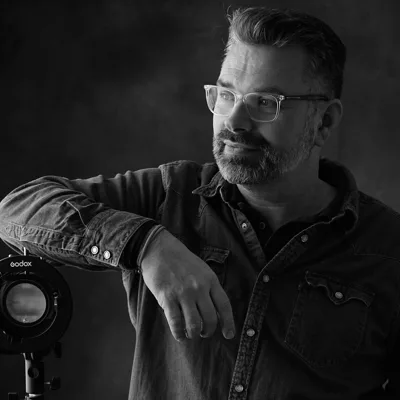
Michiel Heijmans, one of the editors
Updated on October 13, 2026
Taking a photo is one thing
Can you photograph anyone without permission? In the Netherlands, you can generally photograph whatever you want in public spaces. But there's quite a bit behind the words “public spaces” and “photograph.”
Taking a photo is different from publishing it. That distinction helps. Whether you're allowed to take a photo somewhere doesn't automatically tell you whether you're allowed to show it to everyone.
The Netherlands and Belgium also have different starting points. So what you've read about Dutch portrait rights doesn't necessarily apply in Belgium.
This article provides general legal information, not legal advice. It helps you understand the main differences. Without having to mentally leaf through a law book every time someone walks past.
Not every place you walk is a public space
That shopping center in Eindhoven is a good example. An indoor shopping center is often managed by a property owner or retailers' association that can set its own rules. Being able to walk in doesn't automatically mean you have the same freedom there as you do in a public space.
The security guard's comment was about window displays. You don't even need an identifiable person in your photo for questions to arise about what's allowed in a particular place.
Taking photos secretly has limits too. It's not allowed in places where people can expect privacy. Think of a home or a place that isn't open to the public. The freedom to photograph on the street isn't blanket permission to take photos unnoticed everywhere.
So there are questions to consider before publication even comes up: where are you, what rules apply there, and can people expect privacy?
The Netherlands: what is a reasonable interest?
When publishing a portrait that wasn't commissioned, such as a street photo, Article 21 of the Dutch Copyright Act is relevant.
The starting point: publication is allowed unless the person portrayed has a reasonable interest that weighs against it. This is assessed on a case-by-case basis.
“Reasonable interest” sounds like something you'd want to ask a lawyer about first. In plain language, it can involve someone's privacy, for example. Or someone being identifiable in an embarrassing or vulnerable situation. A photo accompanying a negative story that casts the person in a bad light can also give rise to such an interest. Commercial use of a famous face is another often-cited example.
These aren't boxes you can check to get an immediate, definitive yes or no for every photo. The circumstances matter. The photo itself, the situation the person is shown in, and the context in which you publish it.
Being allowed to take a photo doesn't mean every use of it in a publication is allowed. That's an important distinction in street photography.
Being identifiable makes a difference
When you hear “portrait,” you might think of someone posing neatly for the camera. Legally, what matters is whether the person can be identified in the image. So a street photo can be a portrait too.
A person who isn't identifiable in the photo doesn't fall within that definition of a portrait. That distinction matters for portrait rights. On its own, it tells you nothing about any rules at the place where the photo was taken.
During a photo walk, a man once demanded that a participant delete a photo of him. The man wasn't identifiable in the photo. Still, within seconds it had become a matter of principle.
There's clearly more to a conversation like that than the law. You can read more about that situation and the role your own attitude plays in my article on handling a request to delete a photo.
Belgium: consent as the starting point
In Belgium, this is called the right to one's image. Article XI.174 of the Code of Economic Law and the protection of private life both play a role.
The starting point for publication is stricter than in the Netherlands: publishing a photo in which someone is identifiable generally requires consent.
There are exceptions. Someone might appear incidentally in a photo of a public place or a crowd. An exception also applies to public figures during their public activities.
So the distinction between someone appearing incidentally in a photo and one identifiable person being its subject matters. In the second case, the general requirement for consent carries particular weight.
“It was on the street” doesn't fully answer the question of whether publication is allowed. Here too, it helps to treat taking the photo and publishing it as separate questions.
Then there are your own rules
The law doesn't cover everything. My main rule is that I don't photograph people in ways I wouldn't want to be photographed myself. That's my personal boundary. Not an extra provision in the law, though that would make things nice and simple.
That boundary can change. I used to avoid photographing children. Now I do, if I see a story there. I still don't photograph people eating. I don't think it ever produces good photos. That's a judgment about my photography, not a statement about what you should do.
When it comes to publication, an embarrassing or vulnerable situation can carry legal weight. How you personally judge that situation is a separate decision. I discuss this further in my article on photographing children and vulnerable people.
I like showing my photos to people who aren't street photographers. Sometimes their facial expressions tell me enough. Once you publish, your photos reach people with their own standards. Those don't have to resemble yours.
That's also what makes respect for people on the street so personal. I'm not saying I get everything right.
Knowing what's allowed gives you room
To cover the details, I wrote De Wet van de Straat with legal expert Charlotte Meindersma. Using my photos, we discuss topics including the limits of public spaces, portrait rights, and copyright.
That knowledge is certainly not meant to scare you. Personally, it makes me feel more relaxed out on the street.
The law provides a framework. Your own values help determine what you do within it and which photos you want to show. Those considerations come together in my article on where you set your own standards. What are your rules?
Questions about Can you photograph anyone without permission?
Can you photograph someone on the street in the Netherlands without permission?
In public spaces, you can generally photograph whatever you want. Not every accessible place is a public space. Publishing a photo in which someone is identifiable also requires a separate assessment.
What does a reasonable interest mean when publishing a photo?
It might involve a privacy interest or an embarrassing or vulnerable situation that weighs against publication. For a portrait that wasn't commissioned, this is assessed on a case-by-case basis under Article 21 of the Dutch Copyright Act.
Do you always need consent to publish a photo in Belgium?
Consent is the starting point for a photo in which someone is identifiable. There are exceptions, such as someone appearing incidentally in a photo of a public place or crowd, and public figures during their public activities.
5 essential street photography tips
Sign up for Michiel’s newsletter and get his free e-book with practical tips and favorite street photos. First, confirm your email address using the link in the email.
About Michiel Heijmans
Portret- en straatfotograaf. Boeken: Straatfotobijbel (Photofacts Publishing), The Observer (Uitgeverij KOMMA), De Wet van de Straat (met mr. Charlotte Meindersma). Columns voor Photofacts, voorheen voor Focus Magazine. Expert Perfecte Plaatje 2025. Lezingen voor CameraNu en fotoclubs. Podcast 30…
View Michiel Heijmans’s profile