
What you get out of a workshop
My first photography workshop was at Miriam Rohde's kitchen table. My camera was set to auto and I had no idea what I was doing, so luckily there was plenty to learn.
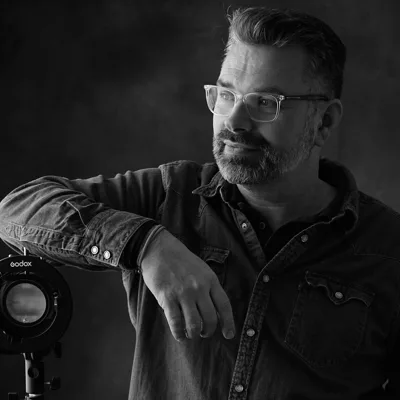
Michiel Heijmans, one of the editors
Updated on October 13, 2026
It started with ISO and aperture
When I started taking photos, I wanted to become a better photographer, learn to see differently and meet other photographers. Those were my goals. How I was actually going to get better, I didn't know yet. That's what auto mode was for, after all.
I learned about ISO and aperture at Miriam Rohde's kitchen table. Just learning by doing. Then came workshops with Evely Duis, where I learned to use flash. Later, I learned to work with a single flash on location, too. With Michiel Fischer, the lights got bigger, and there were a lot more of them.
For street photography, I went to Fokko Muller. At the time, I was shooting with a 70-200mm. Getting closer was something I still had to learn. A lens like that is, of course, excellent for putting that off a little longer.
I went to Paris with Valérie Jardin and also took online workshops. Different photographers, different ways of working. Looking back, much of the value for me was in seeing how someone else works while you're still figuring out what suits you.
You're allowed to look over someone's shoulder
Knowledge is good. Insight is better.
You can explain how ISO works. Seeing what another photographer notices is a different kind of lesson. What catches their attention? What do they find interesting? And how does that eventually become a photo?
For me, that's the point of a workshop: you get to look over someone's shoulder. You're right there, watching what the instructor does, and you can ask why. Even if the answer seems obvious to them. You're there to learn. You don't have to know everything already.
With Fokko, getting closer was one of those lessons. It gave me something I could use in my own street photography. A different way of working than I was used to with that 70-200mm.
You don't have to adopt someone's entire way of working, either. Maybe a particular approach suits you and you leave the rest. A trick can be useful. An insight can help you understand why you'd use it.
That's where it gets interesting.
You learn from the other participants, too
You sign up for a workshop with a photographer you want to learn from. It makes sense to focus on them. Meanwhile, other participants are walking beside you, each with their own way of seeing.
What do they see? What do they pay attention to? Looking at each other's photos gives you a chance to talk about that. You can ask what drew someone to a situation and share what you see in the photo. For me, that conversation is just as much a part of learning as the instructor's explanation.
The nice thing is that you don't all have to be at the same level. Someone doesn't have to be a better photographer than you to notice something you walk right past. A different perspective can be enough to make you curious.
I love workshops so much that I started teaching them myself. That way, I get to learn by watching my participants. That might sound like a convenient way to keep feeding my own curiosity. It is.
Why a small group works
In a small group, it doesn't take long to get to know each other, share a laugh and start learning. You see what others are doing. There's room to ask questions and time to work on your own photography.
Those shared laughs matter to me, too. Meeting other photographers was one of my reasons for taking workshops, after all. Photography is fun to talk about, especially with people who understand why you stop somewhere and keep looking.
For me, personal attention means there's time for your questions. Someone else may be working on something completely different. That doesn't have to get in the way. It might give you a reason to take a look at what they're doing.
A small group makes room for that. You get to know the people behind the cameras and understand a little more about the choices they make.
Your style, a little clearer
Learning by watching someone else might make you wonder whether everyone will end up taking the same photos. That's certainly not my intention.
I want you to leave with your own style, just more clearly defined. With a better sense of what makes a photo yours. Which choices suit you and what you want to explore further.
That's why I think it's important to have a chance to try what you learn for yourself. You can borrow an approach from the instructor and see what it does for your photos. Does it suit you? Do you want to keep working with it? That decision is yours.
That also relates to how you learn to recognize your own style. Someone else's perspective can help, while you make your own choices.
What do you take home?
The value of a workshop is in what you get out of it, whichever one you take. One-on-one or in a group.
Maybe you take home something practical, as I did when I learned about ISO and aperture at that kitchen table. Maybe you start seeing differently because you've watched how someone else works. Or you feel like exploring what suits your photography a little further.
For me, workshops open up your world. You find another way to take a photo or look at a situation. And along the way, you have fun with people who enjoy photography just as much as you do.
You'll never come away a worse photographer.
If you'd like to join me sometime, you'll find my workshops on my website.
Questions about What you get out of a workshop
What do you learn in a photography workshop?
That depends on the workshop and your questions. You can learn technique, but you can also see what another photographer notices and how they make choices. For me, much of the value comes from watching how someone else works.
Why is a small group helpful?
You get to know each other quickly and there's room for personal attention. You also see how the other participants take photos. You can learn from their questions and choices, too.
Do I have to adopt the instructor's style?
No. You can borrow something from their approach and decide for yourself what suits you. The goal is to develop your own way of seeing.
5 essential street photography tips
Sign up for Michiel’s newsletter and get his free e-book with practical tips and favorite street photos. First, confirm your email address using the link in the email.
About Michiel Heijmans
Portret- en straatfotograaf. Boeken: Straatfotobijbel (Photofacts Publishing), The Observer (Uitgeverij KOMMA), De Wet van de Straat (met mr. Charlotte Meindersma). Columns voor Photofacts, voorheen voor Focus Magazine. Expert Perfecte Plaatje 2025. Lezingen voor CameraNu en fotoclubs. Podcast 30…
View Michiel Heijmans’s profile